
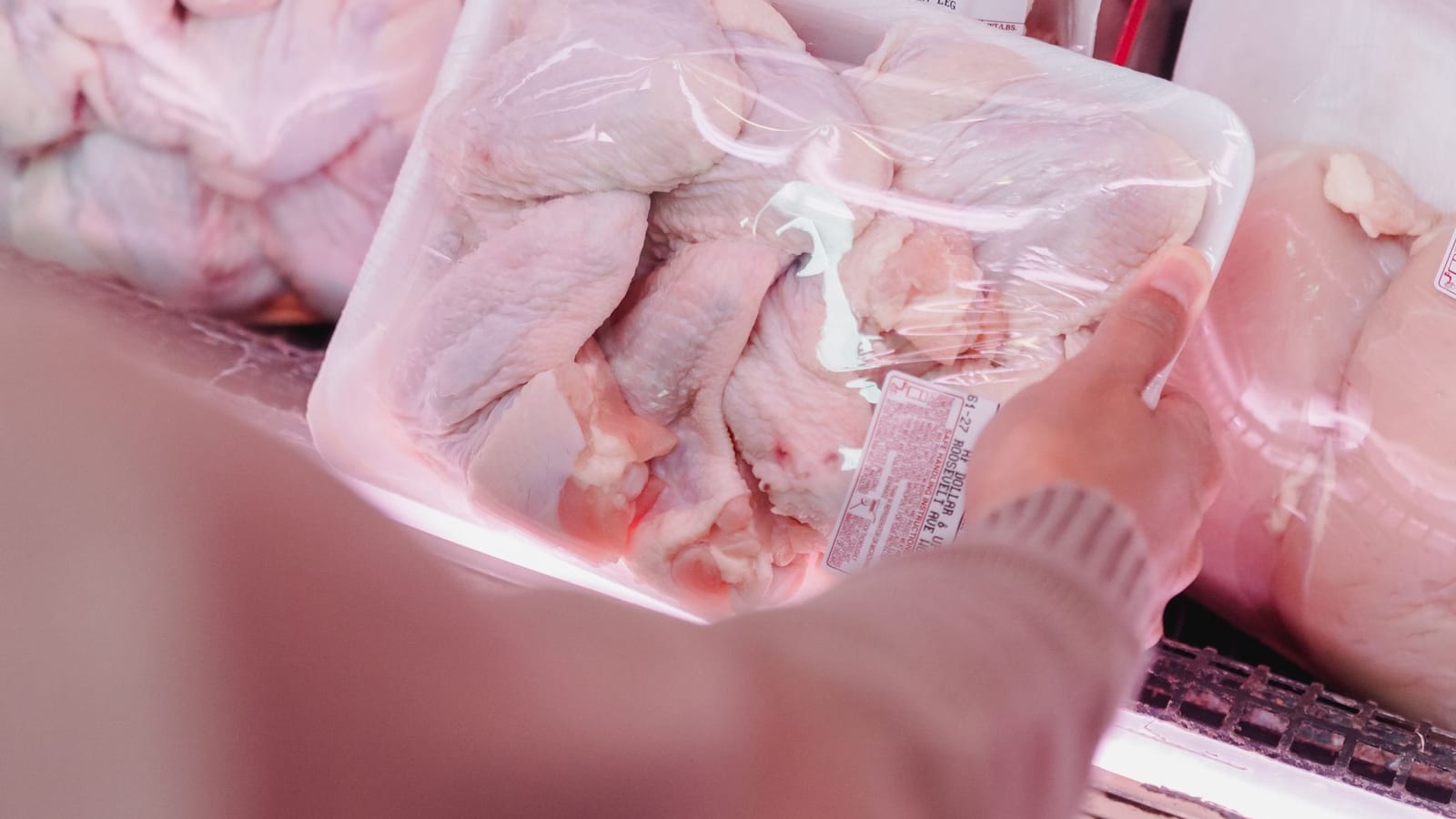

The free turkey offers went up in the first week of November, which is roughly when they always do, and I got the same text from my mother that I get every year. Screenshot of the ad. No message. Just the screenshot, which in my family means well?
The offer is a good one to think about carefully, because it is the cleanest example of a promotion type that shows up all year and that almost nobody does the arithmetic on: spend X, get Y free.
It is not a discount. It is a threshold. Those behave very differently and the difference is worth real money.
Why a threshold is not a discount
A discount lowers the price of a thing you were going to buy. Ten percent off butter is ten percent off butter, full stop, and the only way it costs you money is if it convinces you to buy butter you did not want.
A threshold pays you a fixed amount to change your behavior. Spend $150 in one transaction, get a bird worth maybe $18. The value of that offer depends entirely on one question: what would you have spent otherwise?
There are basically three shoppers here and the offer means something completely different to each.
You were going to spend $150 anyway
Then it is free money. Genuinely. Take it, and stop reading this section.
This is more people than you would think in November, because Thanksgiving groceries are a large single-trip purchase. If you host, you are probably clearing the threshold on the sides alone.
You were going to spend $110
Now you have to find $40 of additional groceries to unlock $18 of turkey. That is a fine trade if the $40 is stuff you were going to buy in the next few weeks anyway. Paper towels, coffee, canned goods, anything shelf-stable.
It is a bad trade if the $40 is filler. And it is a genuinely bad trade if you are buying that $40 at a store whose regular prices run meaningfully above the cheapest option near you, because then you are also paying the store-choice penalty on all of it.
That last part is the piece I never see mentioned. Our September basket work found gaps of thirty to sixty percent per unit between the cheapest and most expensive of the three chains we track on a normal list. If you are stretching to a threshold with $40 of pantry goods at the expensive end of that range, the premium you pay on those goods eats a real chunk of the turkey.
You were going to spend $60 and shop somewhere else
Then the offer is costing you money and dressing it up as a gift. This is the case the promotion is designed for.
SMOPPER INSIGHTS
What the “free” turkey nets you, by what you were spending anyway
Assumes an $18 bird and a 30% price premium on any groceries bought to reach the threshold.
Every promotion shaped like this
The turkey is seasonal. The structure is not, and once you can see it you will see it constantly.
Spend $X, save $Y
The same thing with the reward denominated in money instead of poultry. Slightly easier to evaluate because you do not have to estimate the retail value of the reward. Same three shoppers, same three answers.
Buy two, get one free
This is a threshold in disguise, and it is the one I see people misread most often. It is a 33% discount if you wanted three. If you wanted one, it is a 200% price increase with a discount attached. The test is not whether the math is good. The test is whether the quantity was already your quantity.
Perishables are where this goes wrong. Three bags of salad at the price of two is a discount on one bag of salad and a bin full of the other two.
Fuel points and loyalty currency
The awkward one, because the reward is denominated in something that is not money and cannot be spent on anything except one specific thing. Fuel points are worth their face value only if you were going to buy that much fuel, at that station, before they expire. For a lot of people the effective value is well under half of face, and the promotion is priced as though it were full.
I am not saying ignore them. I am saying convert them to dollars honestly before you let them influence where you shop, and be strict about the expiry.
The free item at the register
Genuinely free, no threshold, no obligation. These exist and they are fine. Take them.
What the store is buying
It is worth understanding what the other side of this trade looks like, because it explains why the offers are structured the way they are rather than some other way.
A threshold promotion is not really trying to sell you a turkey. It is buying three things.
A larger basket. The obvious one. Every dollar between where you would have stopped and the threshold is incremental revenue at normal margin.
A consolidated trip. Much more valuable than the first, and less discussed. If you were going to split Thanksgiving across two stores, a threshold gives you a strong reason not to. The store is paying eighteen dollars to be the only store you visit that week, and if your Thanksgiving shop is two hundred dollars that is an excellent trade for them.
A habit. The cheapest thing a grocery store can buy is your default. Somebody who does a big consolidated shop at one store in November is meaningfully more likely to do it again in December.
None of that is sinister. It is a trade, and it is a reasonable one for both sides, as long as you know which of the three you are actually selling.
The three questions I ask now
This works for any threshold promo, not just November.
What is the reward actually worth at retail? Not what the sign says. A 14-pound bird at the going per-pound price. Turkey is usually a loss leader at Thanksgiving anyway, so the free one is frequently worth less than you would guess, because the paid one was already cheap.
How far am I from the threshold? If the answer is under about fifteen dollars, it is nearly always worth closing. If it is over fifty, be honest with yourself about what goes in the cart.
Is the gap fillable with things I would buy anyway? This is the real test. Shelf-stable goods with a long horizon count. A second dessert does not.
A note on the bird itself
Frozen whole turkey is one of the most aggressively discounted items in American grocery, every year, without fail. It is the classic loss leader: heavy, seasonal, emotionally loaded, and it drags an entire cart of profitable side dishes in behind it.
Which means the honest comparison is not "free turkey versus paying full price for a turkey." It is "free turkey versus the very cheap turkey you could have bought at the store down the road." That is a much smaller number, and it is the number the offer is quietly hoping you do not use.
What I did
I took the offer. I was hosting, I was going to clear $150 without trying, and I would have felt ridiculous not to.
But I did not do the other thing I have done in past years, which is buy the sides at the same store out of momentum. The canned goods and the baking staples came from Aldi earlier in the week, the turkey came free, and the fresh stuff came from wherever it was best that Thursday.
Splitting a Thanksgiving shop across two stores is annoying and it is about twenty minutes of extra driving. I did it because the alternative was letting an $18 bird decide where I spent $200, and once you say it that way it is not really a decision.
If you want the version of this arithmetic that uses your list instead of my assumptions, you can price a basket across the stores near you and see what your own threshold gap is actually costing.
The rule, if you want one sentence
A threshold promotion is worth the value of the reward minus the cost of everything you would not otherwise have bought.
That is the whole thing. It is not complicated arithmetic. It is just arithmetic that the offer is specifically designed to stop you from doing, by putting a large friendly number next to the word "free" and letting you fill in the rest yourself.
Most of the time the answer is fine and you should take the offer. The cases where it is not are the cases where the gap is large, the filler is genuinely filler, and the store is not one you would otherwise pick. Those three tend to arrive together, because that is the shopper the promotion was built for.